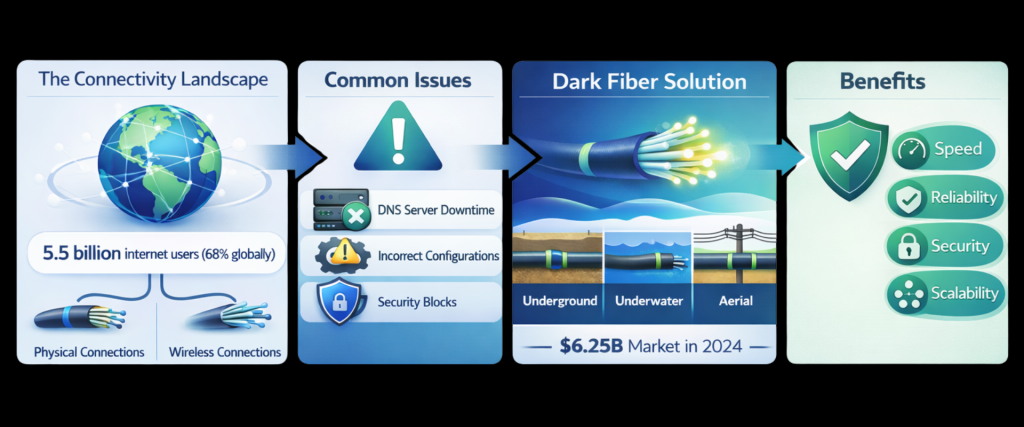
Network connectivity is how computers and devices connect to share information. For example, a global telecom organization reports that 68% of people around the world (5.5 billion people) use the internet in 2024. This shows how important good connections are for businesses and people today.
Companies need fast and reliable ways to connect their systems. That’s where dark fiber networks come in. Dark fiber networks give businesses their own private fiber cables. This helps them control their connection speed and quality. Therefore, learning about network connectivity helps businesses pick the right setup for their needs.
What is the meaning of network connectivity?
Network connectivity means devices can connect and talk to each other through a network. This lets information move from one place to another. You use network connectivity when you browse websites, send emails, make video calls, or access files stored online. Good network connectivity means your data moves fast and arrives safely.
How well your network works depends on a few things. These include how much data can travel at once, how fast it travels, and how reliable your cables and equipment are. For this reason, businesses need steady connections to keep their work running smoothly. They use these connections every day for customer service, storing data, and running their operations.
What are the different types of network connectivity?
Network connectivity comes in two main types. These are physical connections and wireless connections. Each type serves different needs depending on speed, stability, and use case. Below is the explanation of each type.
Physical connections
Physical connections use actual cables to link devices together. These cables can be made of copper wire or special glass fibers. Specifically, fiber optic cables send information as light signals through thin glass threads. As a result, these cables can carry lots of data very quickly over long distances. In this case, dark fiber means unused fiber cables that a company can rent or buy for their own private use.
Wireless connections
Wireless connections send data through the air without any cables. Instead, they use invisible signals similar to radio waves. For example, common types are Wi-Fi in your office, cell phone networks, and satellite signals. In fact, according to the GSMA State of Mobile Internet Connectivity 2024 report, 4.6 billion people use mobile internet on their phones. Wireless is convenient because you can move around freely. However, cable connections usually work faster and more reliably.
What can cause network connectivity issues?
Unfortunately, several problems can stop your network from working properly. These include DNS server downtime, incorrect DNS configurations, and network security settings blocking DNS traffic. Below is the explanation of each problem.
DNS server downtime
DNS servers work like phone books for the internet. They change website names into number codes that computers understand. DNS server downtime happens when these servers stop working. For instance, this can happen during repairs, attacks from hackers, or technical breakdowns. In 2025, several major DNS outages affected popular services, causing many websites to stop working. As a result, companies using only one DNS provider face bigger problems during these failures.
Incorrect DNS configurations
Wrong DNS settings stop devices from finding websites and online services. These mistakes happen when someone enters the wrong server addresses or sets up the system incorrectly. Small errors in these settings can make it hard or impossible for users to reach the websites they need.
Network security settings blocking DNS traffic
Security systems protect networks from threats and attacks. However, sometimes these security tools block good traffic by mistake. For example, strict security rules or old protection settings can stop DNS requests from going through. As a result, this creates problems for people trying to access websites and online tools.
Securing your network infrastructure
Strong network connectivity is necessary for business success today. Companies must pick systems that work reliably and can grow with their needs. Dark fiber gives businesses full control over how their network performs. These unused fiber optic cables can run on land, underwater, or above ground, and each type needs different protection based on whether it connects nearby areas or covers long distances. In fact, the global dark fiber network market reached USD 6.25 billion in 2024. This shows that more and more companies want their own private fiber cables.
For this reason, ARNet provides dark fiber solutions for companies that need better network connectivity. The company gives businesses their own private fiber cables that work faster and more reliably. As a result, ARNet’s services help companies avoid the connection problems that happen with shared networks.
Businesses should pick ARNet because the company offers reliable systems that grow as your company grows. ARNet’s private fiber networks remove speed limits and provide better security than regular shared services. This means your company can set up the network exactly how you need it. You can keep strong performance for all your important business activities.
About the Author
Nabila Choirunnisa, Digital Marketing Executive at ARNet