

Cabling is the base of modern networks. It means the cables and links that move data between devices and places. These include fiber cables, copper cables, and coaxial cables. They carry voice, video, and data inside a business.
Good cabling keeps connections steady, reduces problems, and supports daily work. A network needs good planning, proper setup, and regular checks to work well and stay safe. Over time, this helps the network last longer in data centers and business networks. To see how it helps different needs, look at the main types used today.
What are the three types of cabling?
There are three main types of cabling used in networks, where each type serves different needs, such as speed, distance, and daily use. Some work best in offices and small networks, while others support larger systems that carry large amounts of data. Below is a simple explanation of each type.
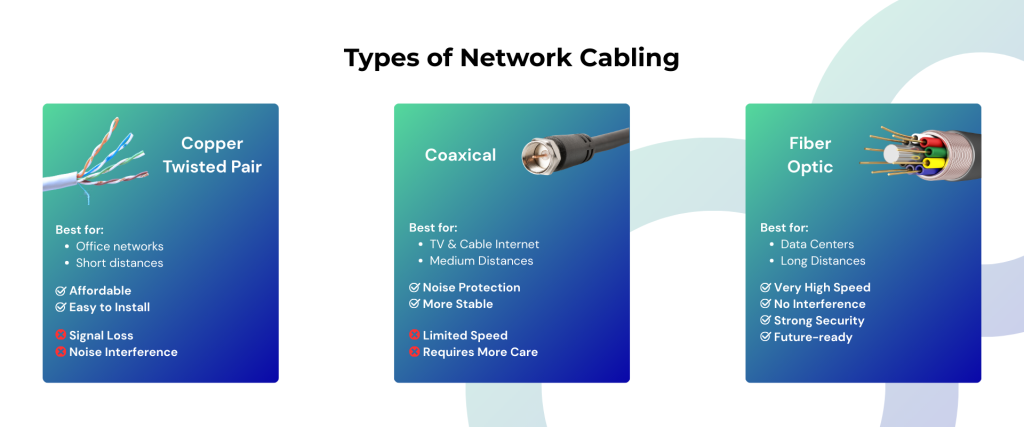
- Copper twisted pair cabling: This type is affordable and easy to set up. It works well for short distances and local networks in offices. However, it can be affected by noise and signal loss, so it is not the best choice for large or main network lines.
- Coaxial cable: Coaxial cable has good protection from outside noise and is often used for TV and cable internet. While it is more stable than copper twisted pair, it does not support very high speeds and needs more care, which limits its use in modern networks.
- Fiber optic cable: Fiber cable uses light to send data. It supports very high speed, long distances, and strong security. It is not affected by interference and can grow with future needs, which is why it is widely used in data centers and main network connections.
Cabling practical tips for enhanced network performance
Before looking at specific best practices, it is important to know that cabling is a basic part of how a network works. Good planning helps keep the network steady, supports growth, and allows data to move smoothly as needs increase. It also helps lower the risk of problems caused by weak or messy connections.
Starting with a clear and simple approach helps organizations deal with future growth and technology changes more easily. By setting easy rules from the start, teams can build a network that is easier to manage, fix, and improve over time. This leads naturally into the key points explained next.
1. Plan cabling before starting
Make simple drawings and choose where cables will go before work starts. Check what the network needs now and later. Look at the area to find clear paths and avoid trouble spots. Good planning helps stop mistakes, saves time, and helps new cabling work well with the current network.
2. Use fiber cabling for long runs
Use fiber cables for main links and long runs that need fast and steady data. Fiber is not affected by electrical noise and can send data far without problems. It also helps keep data safe. Using fiber helps the network stay strong and ready for future needs.
3. Keep simple cabling records and stock lists
Write down basic details for all cabling, such as type, path, install date, and past fixes. Use easy tools or lists to track where cables are and their condition. Check these records often so problems can be found and fixed faster. Good records make daily work easier and reduce mistakes.
4. Install cables correctly and test them
Install cables by following basic rules and have trained workers check the work. Test each cable after installation to make sure the signal is good before use. Check fiber connections so signal loss stays low. Careful installation and testing help avoid future problems and service downtime.
5. Use field teams for regular checks and repairs
Place field workers in key areas so they can reach problems quickly. Do regular checks and simple maintenance to find issues early. Make sure teams have enough tools and spare parts. Regular field work helps keep the network stable and working well.
Optimizing network infrastructure for business growth
Network cabling infrastructure is a long term investment that affects connectivity, security, and daily operations for many years. Good planning that uses fiber cables, clear records, and proper installation helps networks grow with the business. By following simple best practices, organizations can improve performance, reduce downtime, and keep important data and communications safe.
ARNet is a reliable choice for organizations that need stable and long lasting network infrastructure. With more than 10,000 kilometers of dark fiber across Singapore, Malaysia, Thailand, and Indonesia, ARNet provides steady cabling and connectivity through its Design, Build, and Operate model. Ongoing monitoring, clear service agreements, and access to over 60 data centers help support secure and scalable growth.
About the Author
Nabila Choirunnisa, Digital Marketing Executive at ARNet