

Modern organizations need stable network systems to support daily work and keep devices and systems connected. At the center of this setup, the cabling system acts as the base for all connections in a building. It creates clear paths that organize cables, connectors, and hardware so data can move smoothly. According to Kings Research, the global structured cabling market was valued at USD 11.45 billion in 2024 and is expected to reach USD 17.97 billion by 2032, showing steady growth in infrastructure.
As networks expand beyond one building, it becomes important to understand how internal systems connect to outside dark fiber networks. This helps data centers, office buildings, and telecom providers build connections that can grow with their needs. This article explains the basics of cabling systems and how they link to dark fiber.
Kings Research also reports that North America held 34.09% of the structured cabling market in 2024, supported by strong use in commercial buildings and data centers. Because of this, organizations now need dependable infrastructure as bandwidth needs continue to rise. This creates new demand for solutions that combine in-building cabling with dark fiber. As a result, network managers must build systems that work for today while leaving room for future growth.
What is a cabling system?
A cabling system is a planned setup that organizes cables, connectors, patch panels, and other hardware in a building or site. Global Growth Insights reports that over 52% of companies are now upgrading their cabling to support higher data needs. This shows how important a clean and well-organized design is for keeping networks stable. A structured cabling setup gives steady performance by following set standards. It also helps cut costs compared to messy or unplanned layouts. Companies that use structured cabling spend less on maintenance and fix problems faster. They also have more room to grow as their tech needs change.
The research also shows that almost 55% of IoT setups depend on structured cabling. This proves that structured cabling supports new technology needs. Modern cabling systems now use copper and fiber optic cables in organized paths. This setup makes installs faster and changes easier. This setup also reduces downtime during upgrades, helps improve airflow in equipment rooms, and makes documentation simpler for ongoing maintenance.
Main parts of a cabling system
A cabling system has six main parts that work together to connect devices in a building. These parts are the EF, ER, backbone cabling, TRs/IDFs, horizontal cabling, and WA parts. Together, they form a complete cabling setup.
Global Growth Insights also reports that about 50% of smart building projects use structured cabling to support automation and monitoring. These parts follow industry standards so different equipment and brands can work well together. Here are the parts you should know:
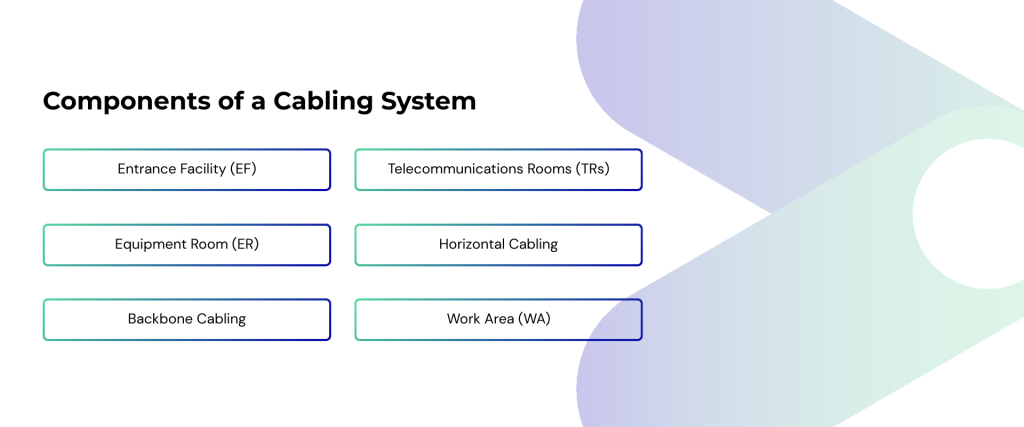
- Entrance Facility (EF): The EF is where outside telecom services enter the building. It handles provider links, including dark fiber, through proper termination equipment.
- Equipment Room (ER): The ER stores key network infrastructure like switches, routers, and servers. Dark fiber is “lit” here using transmission equipment.
- Backbone cabling (vertical): This cabling creates the main vertical paths between the EF, ERs, and TRs, carrying dark fiber across the building.
- Telecommunications Rooms (TRs/IDFs): TRs on each floor link backbone cabling to horizontal cabling and gather floor connections for dark fiber setups.
- Horizontal cabling (horizontal): This cabling runs from TRs to outlets within 90 meters, using copper or fiber to deliver high-speed links to users.
- Work Area (WA) components: WA parts such as outlets, patch cords, and connectors form the final link to devices and must be set up well to deliver full bandwidth.
Connecting the cabling system to dark fiber
The handoff point where providers deliver dark fiber is usually at the Entrance Facility. This is where outside cables enter a building and link to the inside network. At this spot, organizations set up the needed connectors and patch panels to join the provider’s cable with their own cabling system. Then, backbone cabling carries the dark fiber connection to equipment rooms that hold the gear used to “light” the fibers. This setup helps organizations grow their dark fiber use in a clean and planned way as their bandwidth needs increase.
Data centers now lease more dark fiber to support safe, high-speed links between sites that run cloud services. Knowing how cabling system parts work with dark fiber networks helps teams plan better for both current and future needs. As a result, they can build a network that is easier to scale and manage over time.
ARNet provides dark fiber solutions that connect data centers, office buildings, and key network areas across Southeast Asia. The company is based in Malaysia and also operates in Singapore, Thailand, and Indonesia. With long experience in building and running fiber networks, ARNet supports organizations that need strong partners for cabling and dark fiber projects. As a result, we help customers plan, build, and grow their infrastructure with confidence. Clients can rely on ARNet for custom designs, fast builds, and full project support across the region’s growing digital network.
About the Author
Nabila Choirunnisa, Digital Marketing Executive at ARNet